New Services, Greater Income
More DetailsInfo@reliancecapitalfinancelimited.com
R e l i a n c e C a p i t a l
F i n a n c e L i m i t e d
Info@reliancecapitalfinancelimited.com
New Services, Greater Income
More Details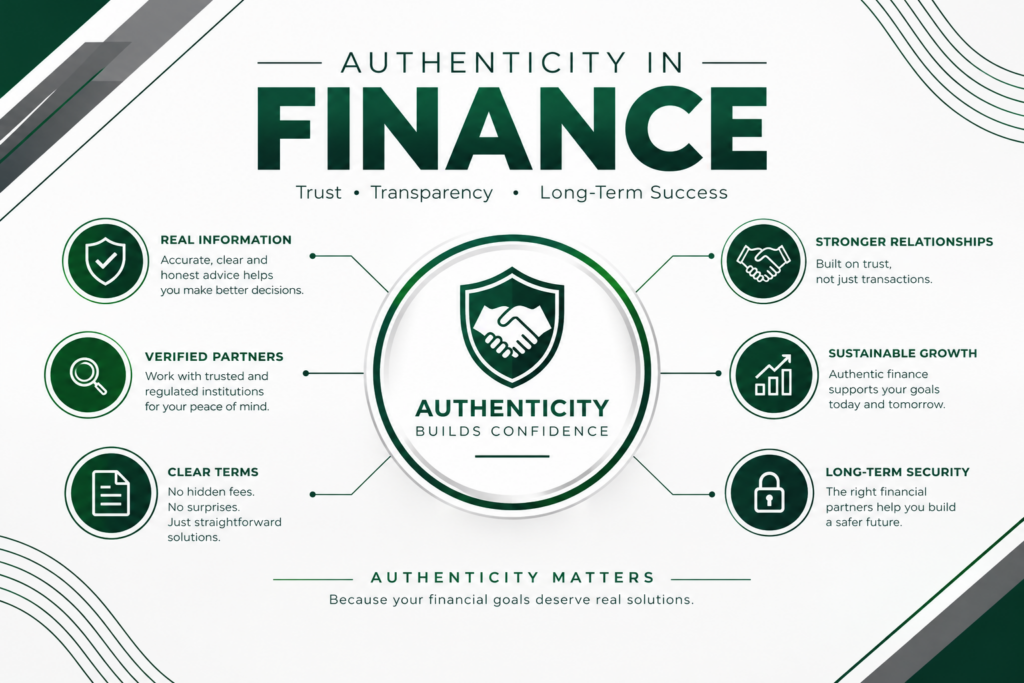
In the financial sector, authenticity means aligning words, documentation and actions to promote transparency, accountability and trust in every transaction. Building trust through transparency and integrity is not a marketing slogan. Trust enables capital to flow, supports contract agreements and helps long-term business relationships withstand difficult periods. When firms present complete financial figures, disclose conflicts of interest and keep their promises, markets operate more effectively. When they are not, even technically legal structures become fragile.
Finance depends on information that the other party cannot fully verify in the moment. A lender accepts accounts. An investor accepts a prospectus. A client accepts advice about risk. Authenticity is the discipline of making that information honest in substance, not merely compliant in form.
For Reliance Capital Finance Limited, authenticity begins with transparency, honesty and a clear commitment to keeping clients properly informed. Firms should communicate every important detail before clients make financial decisions. This includes service fees, commissions, business relationships, the current institution issuing a financial instrument, the scope and limitations of a guarantee, and the assumptions used in financial forecasts.
True integrity goes beyond simply providing information. It means explaining that information in a way clients can understand, without hiding important conditions behind complicated language or lengthy disclaimers. Similarly, building a friendly relationship with a client is not enough if potential conflicts of interest remain undisclosed. At Reliance Capital Finance Limited, clear communication and responsible conduct should work together to support informed financial decisions.
Authenticity must also be reflected in every stage of a financial transaction. Company advertisements, initial proposals, verbal discussions, term sheets and final contracts should present consistent information.This matters especially in international and structured finance, where transactions often involve complex documents, multiple financial institutions and parties governed by different legal systems.
When the promises made at the beginning do not match the conditions presented later, confidence can quickly disappear. Unexpected fees, unclear obligations or restrictions hidden in contractual terms may leave clients feeling misled. By contrast, explaining limitations honestly, clarifying requirements early and ensuring that all parties understand the agreed conditions can help prevent misunderstandings.
Reliance Capital Finance Limited recognizes that authenticity is demonstrated through actions, not words alone. Consistent information, transparent financial terms and responsible communication are essential foundations for building professional relationships and maintaining trust throughout the financing process.
Finance has a long record of products that were legal, profitable and poorly understood by the buyer. Complex financial instruments, unclear fee structures and delayed disclosure of bad news have led the public to suspect that some firms use complexity to hide important facts. Rebuilding confidence therefore takes more than a values statement. It takes audit trails, plain explanations of risk, and a willingness to lose a mandate rather than stretch a fact.
Regulators have responded with disclosure rules, conduct standards and fitness tests. Those rules set a floor. Authenticity sits above the floor. It asks whether the client could explain the deal back to a colleague without being surprised later.
Clear ownership of advice helps. Clients deserve clear information about each party’s regulatory status, who pays whom and where an introducer’s role ends and an adviser’s responsibilities begin. Firms should disclose conflicts of interest openly before taking steps to manage them. If a firm both arranges an instrument and receives a fee from the provider, that fact belongs at the front of the conversation.
Numbers should be source able. Forecasts need their assumptions. Historical performance needs its period and its exclusions. “Up to” figures and best-case illustrations should be labelled as such. When a delay, a default or a market move changes the picture, the update should come from the firm, not from the client’s own discovery.
Language matters. Jargon that impresses but does not inform is a form of opacity. British professional prose can be precise without being obscure. A structure that cannot be summarized in plain sentences is often a structure that has not been fully thought through.
Integrity cannot rest with the compliance team alone. When firms reward staff only for sales volume, employees may hide important facts to meet their targets. Likewise, when leaders treat questions as signs of disloyalty, staff may hesitate to raise concerns early. Authenticity in finance starts with leadership. A company’s rewards, promotion decisions and approach to mistakes show whether it truly values honesty and transparency.
Independent review supports that culture. External audit, legal opinion and, where appropriate, a second pair of eyes on valuation or instrument authenticity reduce the chance that optimism hardens into misstatement.
Not every confidential negotiation can be published. Commercial secrecy and client privacy remain legitimate. The test is whether concealment protects a proper interest or merely protects the firm from scrutiny. Clients can accept confidentiality. They rarely accept being surprised by a cost or a risk that the adviser already knew.
Reliance Capital Finance Limited builds authenticity in finance through consistent actions: we disclose all fees, identify conflicts of interest, maintain consistent documentation and correct errors promptly whenever facts change. Transparency without integrity is a pile of unread pages. Integrity without transparency is a private virtue that the market cannot test. Together they create the only durable form of trust available in a business that sells promises about money. Firms that treat this as optional will still find clients in a boom. They will struggle when conditions tighten and every statement is checked. Building trust through transparency and integrity is, in the end, a practical advantage as much as an ethical one.