New Services, Greater Income
More DetailsInfo@reliancecapitalfinancelimited.com
R e l i a n c e C a p i t a l
F i n a n c e L i m i t e d
Info@reliancecapitalfinancelimited.com
New Services, Greater Income
More Details
Dortmund, in today’s sophisticated capital markets environment, has emerged as a strategic hub where structured trade instruments extend far beyond their traditional role as simple payment guarantees. Corporations, investment groups, infrastructure developers, and cross-border traders operating in and around the region increasingly deploy Standby Letters of Credit (SBLC), Bank Guarantees (BG), and Letters of Credit (LC) as dynamic balance sheet management tools rather than merely transactional safeguards.
For organizations operating in or targeting Dortmund, Integrated SBLC, BG, and LC Strategies for Optimized Corporate Portfolio Alignment represent a structured pathway to measurable competitive advantage. Reliance Capital Finance Limited recognizes that the strategic integration of SBLC, BG, and LC facilities strengthens corporate financial architecture and enhances transactional credibility.
This article provides a comprehensive analysis of how these financial instruments function both independently and collectively, and how Reliance Capital Finance Limited systematically structures and aligns them to optimize client portfolios, reinforce financial positioning, and deliver sustainable performance outcomes.
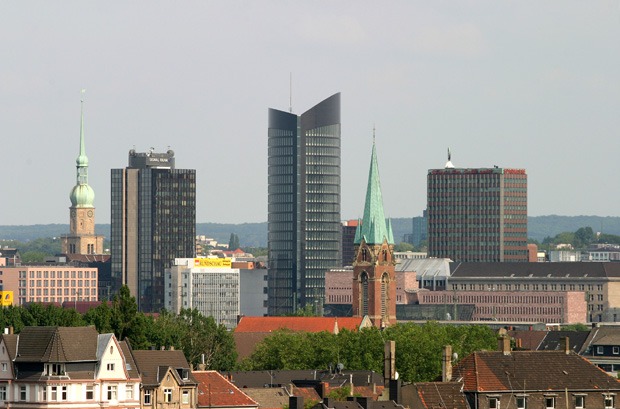
Dortmund, located in North Rhine-Westphalia, Germany, has gradually transitioned from a traditional industrial center into a highly diversified commercial and logistics hub. Historically recognized for its coal and steel industries, the city has, over time, strategically repositioned itself to embrace innovation, technology, and advanced services.
Therefore, when discussing Dortmund I in the context of financial lending strategies, the focus is on:
Germany maintains a highly disciplined and resilient banking framework under the regulatory supervision of the European Central Bank and the Deutsche Bundesbank, both of which enforce stringent monetary oversight, capital adequacy requirements, and systemic risk controls across the financial sector. As a result, lending instruments structured in Dortmund benefit from enhanced regulatory credibility and institutional transparency in international markets.
Core Financial Instruments Explained Understanding the main financial instruments is essential for businesses and investors to navigate the modern financial landscape effectively. Each instrument serves a specific purpose, provides unique advantages, and helps manage financial risk efficiently. Below, we explore the most commonly used instruments.
An SBLC, or Standby Letter of Credit, is a bank-issued undertaking that guarantees payment to a beneficiary if the applicant fails to fulfill contractual obligations. In essence, it serves as a secondary payment mechanism, activated only in the event of default or non-performance by the primary obligation.
Functional Purpose:
Unlike traditional funding mechanisms, an SBLC is structured as a contingent liability rather than as a direct cash disbursement. Consequently, it does not immediately appear as drawn debt on a borrower’s balance sheet; instead, it functions as a financial assurance instrument that becomes payable only upon default or non-performance.
Corporate Portfolio Impact:
A Bank Guarantee (BG) functions similarly to a Standby Letter of Credit (SBLC), as it represents a bank-backed commitment to compensate a beneficiary in the event of contractual non-performance. However, it is typically used in infrastructure development, large-scale construction projects, and performance-based commercial contracts where execution risk must be formally mitigated.
Types:
In Dortmund’s industrial sector, BG instruments are particularly useful in engineering, procurement, and construction (EPC) contracts, where performance assurance and financial credibility are critical.
Strategic Value:
A Letter of Credit (LC) is widely used in international trade as a formal financial instrument that guarantees payment to a seller; provided, however, that the required shipping and trade documents are presented in strict compliance with the stipulated terms and conditions. In essence, it serves as a risk-mitigation mechanism between buyers and sellers.
Benefits:
In European trade corridors, LC-backed transactions significantly improve trade liquidity while simultaneously enhancing supply chain reliability. Specifically, by providing a bank-guaranteed assurance of payment, Letters of Credit reduce counterparty risk and enable smoother financial flows between buyers and sellers.
Using an SBLC, BG, or LC individually can provide transactional security by mitigating specific payment or performance risks. However, strategically integrating these instruments allows corporations to align their financial portfolios with broader operational objectives, optimize risk allocation, and enhance capital efficiency.
Therefore, integration leads to:
Moreover, Dortmund-based corporations benefit from integrated structures when expanding into African, Middle Eastern, and Asian markets.
Portfolio alignment refers to the process of synchronizing financial instruments, such as SBLCs, BGs, and LCs, with an organization’s long-term strategic goals. This ensures that each instrument not only mitigates specific transactional or operational risks but also supports broader objectives such as capital efficiency, liquidity management, and sustainable growth.
Step 1: Assess Corporate Risk Profile
Firstly, it is essential to analyze leverage ratios, liquidity metrics, and operational exposure; collectively, these indicators provide a comprehensive and structured view of an organization’s financial health and overall risk profile. Specifically, leverage ratios assess the extent of debt utilization relative to equity and assets; meanwhile, liquidity metrics evaluate the entity’s short-term solvency and working capital resilience.
Step 2: Determine Instrument Allocation
Secondly, allocate instruments according to specific transactional and strategic needs; in other words, ensure that each financial instrument is deployed in alignment with the underlying risk profile, contractual obligation, and capital objective.
Step 3: Structure Banking Lines
Furthermore, it is crucial to negotiate structured limits with issuing banks, as these define the maximum exposure, collateral requirements, and operational flexibility for instruments such as SBLCs, BGs, and LCs.
Step 4: Integrate Treasury Monitoring
Subsequently, treasury departments should actively monitor contingent liabilities and capital usage to ensure that financial obligations arising from instruments like SBLCs, BGs, and LCs remain within approved risk parameters.

The Dortmund Integrated (Dortmund I) Strategy is structured around three key pillars; collectively, these pillars are designed to optimize financial performance, strengthen risk management frameworks, and ensure operational alignment across diversified corporate portfolios.
Pillar 1: Credit Optimization
By issuing SBLC-backed structures, companies can unlock supplier financing, providing vendors with confidence that payments will be honored even if the buyer experiences temporary liquidity constraints.
Pillar 2: Risk Shielding
Bank Guarantee (BG) instruments protect against contractual defaults by ensuring that the beneficiary receives compensation if the counterparty fails to meet agreed obligations.
Pillar 3: Trade Expansion
Letter of Credit (LC) mechanisms facilitate international commerce by guaranteeing payment to exporters once they present shipping and trade documents that comply with agreed terms.
Consequently, these three pillars create a structured ecosystem that stabilizes financial exposure while simultaneously increasing transactional capacity.
Infrastructure Projects.
In infrastructure finance, a Bank Guarantee (BG) secures contractor performance by ensuring that any failure to meet contractual obligations triggers bank-backed compensation, thereby protecting project sponsors and investors from operational and execution risks.
Manufacturing Expansion.
A Dortmund-based manufacturing firm importing machinery can utilize a Letter of Credit (LC) to formally guarantee payment to overseas suppliers; provided, however, that compliant shipping and trade documents are duly presented in accordance with the stipulated terms. In practice, once the supplier submits documents.
Energy and Renewable Sector.
Germany’s renewable energy initiatives require structured guarantees to support large-scale projects, ensure contractor performance, and secure investor confidence. Therefore, strategically combining instruments such as SBLCs, BGs, and LCs reduces capital strain by optimizing credit usage while maintaining full regulatory and contractual compliance.
Under European regulatory frameworks:
Structured integration of financial instruments must comply with risk-weighted asset (RWA) calculations and cross-border regulatory standards to ensure that capital allocation, liquidity, and risk exposure remain within acceptable thresholds.
Furthermore, proper documentation and thorough legal review are non-negotiable components of Dortmund I structured finance models, as they ensure that all contractual terms, obligations, and risk allocations are clearly defined and enforceable.
2. Reduced direct borrowing costs
3. Enhanced institutional credibility
4. Greater global trade capacity
5. Portfolio diversification
Additionally, companies searching for lending companies in Dortmund frequently prioritize institutions that are capable of delivering integrated guarantee structures rather than merely offering simple loan products. In particular, as financing needs become more complex and transaction-driven, businesses increasingly seek structured solutions that combine credit enhancement, risk mitigation, and performance assurance.
Furthermore, in many cases, these businesses specifically seek partners who can structure comprehensive risk-mitigation frameworks; Consequently, they tend to favor institutions that provide integrated guarantee solutions instead of standalone financing options.
Integrated financial instruments enable:
Corporations can maintain stronger debt-to-equity ratios while simultaneously expanding their operational reach, optimizing capital structure without overleveraging. By strategically deploying instruments such as SBLCs, BGs, and LCs, firms can access contingent financing, secure supplier credit, and guarantee project performance without tying up excessive equity or liquidity.
In competitive tender environments, companies supported by SBLC and BG structures demonstrate stronger financial backing and enhanced institutional credibility. As a result, they are positioned more competitively during bid evaluations; consequently, they often secure larger and more complex contracts.
Therefore, the strategic integration of financial instruments creates measurable corporate advantage by unifying risk mitigation, capital efficiency, and operational alignment within a cohesive and performance-driven framework. By synchronizing tools such as SBLCs, BGs, and LCs within a structured financial architecture.
Sustainability requires a structured balance:
Dortmund I strategies encourage disciplined financial structuring rather than reactive borrowing, emphasizing proactive planning, risk management, and strategic alignment of capital resources. By integrating instruments such as SBLCs, BGs, and LCs within a coordinated framework, organizations can address contingent obligations, secure supplier and project financing, and optimize liquidity without relying on ad hoc borrowing.
Dortmund Integrated SBLC, BG, and LC Strategies represent a sophisticated approach to corporate portfolio alignment. Rather than relying solely on conventional loans, corporations in Dortmund and across international markets can deploy structured guarantees to optimize capital efficiency, mitigate risk, and expand trade operations.
When strategically aligned, SBLCs enhance creditworthiness, BGs secure performance obligations, and LCs streamline trade settlements. Together, they create a resilient financial architecture capable of supporting long-term corporate growth.
For companies searching for a financial lending company with expertise in structured trade instruments, integrated solutions remain the foundation of modern portfolio optimization.
Reliance Capital Finance Limited
Structured Trade Finance & Credit Enhancement Specialists
Website: https://www.reliancecapitalfinancelimited.com
WhatsApp: +852 59163019
Email: info@reliancecapitalfinancelimited.com
We specialize in SBLC, BG, and LC monetization and issuance services; accordingly, our solutions are structured to optimize corporate portfolio alignment across global markets. Specifically, by integrating standby letters of credit, bank guarantees, and trade-backed instruments into broader capital strategies, we enhance liquidity positioning while simultaneously reinforcing risk mitigation frameworks.
For consultation, partnership inquiries, and structured trade finance solutions, contact us today.


Leave A Comment