New Services, Greater Income
More DetailsInfo@reliancecapitalfinancelimited.com
R e l i a n c e C a p i t a l
F i n a n c e L i m i t e d
Info@reliancecapitalfinancelimited.com
New Services, Greater Income
More Details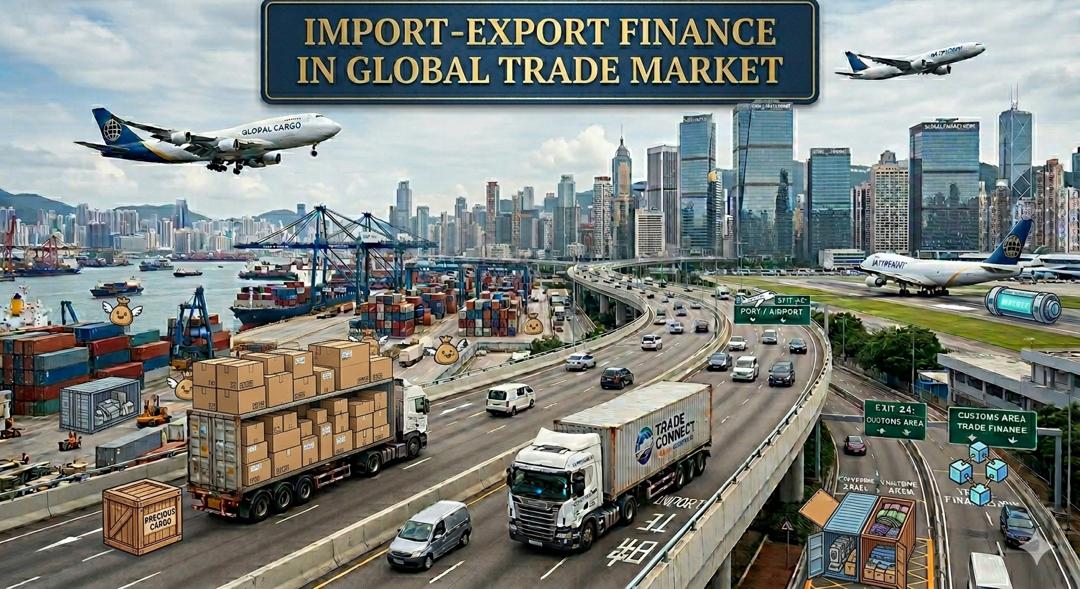
In today’s interconnected economy, import and export finance forms the backbone of international trade. It enables businesses not only to maintain healthy cash flow but also to mitigate transactional risks and confidently enter new markets. Among the various financial instruments available, the Standby Letter of Credit (SBLC) stands out as a powerful safeguard, offering exporters assurance of payment in the event of buyer default.
This article presents a refined perspective on export finance mechanisms, their strategic value, and how businesses can utilize them effectively in global trade.
1. Core Structures of Export Finance
Export finance solutions are structured to support businesses at different stages of the trade cycle, ensuring stability, liquidity, and risk control throughout the entire process. From the initial sourcing of raw materials and production phase to shipment, delivery, and final payment, these solutions help exporters maintain consistent cash flow and meet operational demands.
2. Pre-shipment Finance
This facility provides funding before goods are dispatched. It is primarily used to procure raw materials, support production, and prepare shipments, ensuring that exporters can meet contractual obligations without liquidity constraints.
3. Post-shipment Finance
Once goods have been shipped, exporters often face a waiting period before receiving payment. Post-shipment finance bridges this gap, allowing businesses to maintain operational continuity while awaiting funds from overseas buyers.
4. Letter of Credit (LC)
An LC is a bank-issued guarantee ensuring that exporters receive payment upon fulfilling specified conditions. It significantly reduces counterparty risk and enhances trust between trading partners.
5. Export Credit Insurance
This instrument protects exporters against non-payment risks arising from buyer insolvency or geopolitical instability, thereby strengthening confidence in cross-border transactions.
On the import side, financial structures are designed to facilitate secure procurement:
1. Letter of Credit (LC)
Importers rely on LCs to assure exporters of payment, fostering credibility and enabling smoother negotiations.
2. Advance Payment
In certain transactions, especially with new suppliers, importers may be required to pay upfront, demonstrating commitment and reducing exporter risk.
3. Documentary Collection
This method involves banks acting as intermediaries for document exchange. While it offers moderate security, it is less robust than an LC.
4. Factoring and Supply Chain Finance
Here, a third-party financier pays the exporter early, while the importer settles the payment later. This arrangement enhances liquidity for both parties.
International trade is not without complexities. However, well-informed strategies can effectively address these challenges:
1. Currency Volatility
Fluctuating exchange rates can erode profit margins. Businesses often adopt hedging techniques such as forward contracts to stabilize returns.
2. Cash Flow Pressures
The time lag between production and payment can strain working capital. Structured financing solutions help maintain liquidity throughout the trade cycle.
3. Credit Risk
The possibility of buyer default remains a key concern. Export credit insurance and bank guarantees serve as critical risk mitigants.
4. Regulatory Complexity
Navigating international trade laws requires diligence. Companies benefit from continuous monitoring of regulations and professional advisory support.
In international trade, two commonly used financial instruments are the Irrevocable Letter of Credit (ILOC) and the Standby Letter of Credit (SBLC). Although they may seem similar, they serve distinct roles in managing payment and risk.
An Irrevocable Letter of Credit (ILOC) functions as a primary payment tool. It ensures that the exporter is paid once all contractual conditions—such as shipping documents—are fulfilled.
In contrast, a Standby Letter of Credit (SBLC) acts as a secondary guarantee. It is only activated if the buyer fails to meet payment or performance obligations.
In advanced trade structures, businesses often deploy both instruments simultaneously to enhance security and trust.
For instance, in a high-value machinery transaction, an importer may issue an ILOC to guarantee payment upon delivery. Concurrently, the exporter may provide an SBLC to assure performance or refund obligations. This dual-layer approach strengthens transparency and minimises risk exposure for both parties.
Effective risk management is essential for sustainable international operations. Businesses adopt several best practices:
Trade Financing Solutions to facilitate seamless international transactions
Export Development Support for businesses expanding into global markets
SME Financing to empower small and medium enterprises with accessible funding
Established in 1996 and headquartered in Hong Kong, the company provides financial instruments such as SBLCs and Bank Guarantees, enabling businesses to secure contracts, fund large-scale projects, and effectively manage international trade risks.
Import and export finance is more than a transactional necessity—it is a strategic enabler of global growth. By leveraging instruments such as SBLCs and LCs, and by implementing robust risk management practices, businesses can navigate the complexities of international trade with confidence and resilience.
For tailored financial solutions and expert guidance, businesses are encouraged to engage directly and explore customized trade finance opportunities.
For personalized assistance or inquiries about financing options like SBLCs, contact us directly:
Web: https://reliancecapitalfinancelimited.com
Email: info@reliancecapitalfinancelimited.com